Collaborators Menu

Detector Subsystems and Concepts Work Package
Coordinators: Mogens Dam, Marc-Andre Pleier, NN
Mandate:

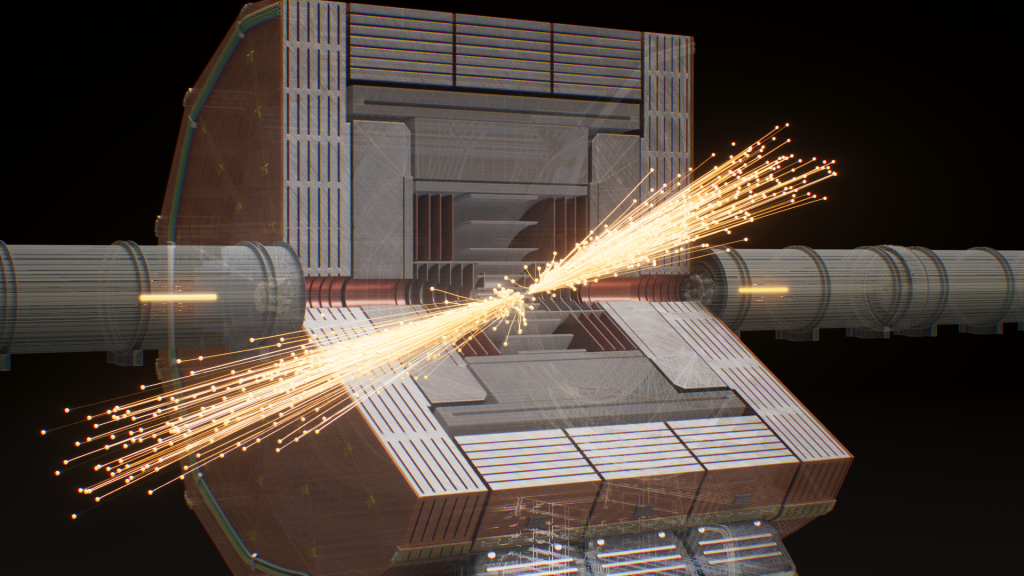
The work on FCC-ee detector subsystems and detector concepts needs to be coordinated centrally to bring the detector conceptual design studies to the level needed by the CERN Council to make a decision on whether or not the FCC should be approved; and from there, whether FCC detector conceptual design reports should be called for.
The work package organisation is aimed at fostering collaboration rather than competition, across the Detectors R&Ds and the individual institutes, towards building a “library’’ of detector subsystems with different technologies (vertex detectors, trackers, luminometers, calorimeters, muon detectors, magnets, …) and related software tools (geometry, digitisation, simulation, subsystem reconstruction and performance analysis). The whole community will then fully benefit from the fact that detector subsystems are largely interchangeable, and can be used in a plug-and-play strategy to study and optimise their performance in several variations of detector concepts.
During the ESPPU process, 39 expressions of interest (EoIs) for FCC detector subsystems and detector concepts were submitted by universities, laboratories, and institutes. Also, Detector R&D (DRD) collaborations have been formed in response to the 2021 ECFA Detector R&D Roadmap towards developing detector technologies, in particular for (but not limited to) FCC-ee.
To ensure efficiency in a context of limited human and financial resources and to preserve the unity of the community at least until the project approval (and possibly much beyond), the work will continue to be shared as much as possible around built-in synergies, e.g., with common software framework, computing model and TDAQ challenge; a universal list of physics requirements; a largely common machine-detector interface; a centralised line of reporting; and a final report towards the end of 2027 to inform the above-mentioned decisions.
Organisation:
The list of generic subsystems level study groups as well as the names of their conveners are given in the ORGANISATION page
- Trackers (including vertex detectors, main trackers, silicon wrappers) and also charged hadron identification, either provided by the trackers themselves or by systems that must exist in close synergy;
- Calorimeters (including electromagnetic, hadron, and combined calorimeters);
- Luminometers (aimed at low-angle Bhabha scattering);
- Muon detection systems;
- Magnets;
- Trigger and Data Acquisition
The number of Concept specific study groups is in constant evolution. The list referenced in the ORGANISATION is, for now (April 2026):
- ALFA
- ALLEGRO [overview, Jan 2026]
- CLD [overview, Jan 2026]
- IDEA [overview, Jan 2026]
- ILD [overview, Jan 2026]
- …
Mailing lists, e-groups and guidelines on the way to use them are given at the bottom of the ORGANISATION page.
Meetings: https://indico.cern.ch/category/14192/
Documentation:
More information on the current activities can be found in
- 9th FCC Physics Workshop parallel session and plenary summary talks
- Subsystems groups mandate 2025-2027
- Detector Concept Studies mandate 2025-2027
Open calls:
None at the moment, although anyone interested should feel free to contact the coordinators !

Other helpful resources:

The work package works in close contact with the Detector R&D program initiated by ECFA and described in this recent overview article : https://www.sciencedirect.com/science/article/pii/S0168900224008751